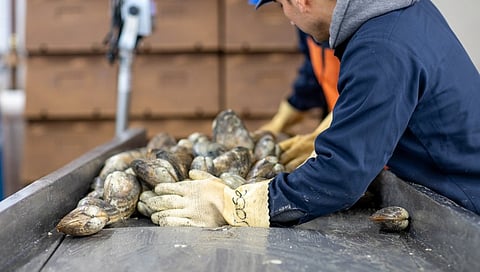


The Seafood Engine will receive $15 million over its first two years and could qualify for as much as $160 million over a decade, according to GMRI.
Photo: Gulf of Maine Research Institute (GMRI).

A New England seafood partnership has secured an initial $15 million award from the US National Science Foundation to develop new technologies and strengthen the region’s fisheries and aquaculture industries.
The NSF Seafood Engine in New England is led by the Northeastern Regional Association of Coastal Ocean Observing Systems (NERACOOS), and brings together fishing and aquaculture businesses, technology companies, researchers and government organisations in Maine, Massachusetts, New Hampshire and Rhode Island.
The funding has been awarded through the NSF Regional Innovation Engines programme. The Seafood Engine will receive $15 million over its first two years and could qualify for as much as $160 million over a decade, depending on its progress and the availability of further funding, according to details of the funding announced this week by the Gulf of Maine Research Institute (GMRI).
The initiative will focus on applying technologies such as artificial intelligence, biotechnology, robotics, advanced manufacturing and ocean monitoring systems across the seafood supply chain, from harvesting and farming to processing and delivery.
“Built on the ingenuity and steadfast determination at the heart of America’s oldest commercial enterprise, the Seafood Engine is ready to confront key challenges facing the industry with bold innovation,” said Jake Kritzer, principal investigator of the Seafood Engine and executive director of NERACOOS.
One of its first areas of work will involve developing what the partners describe as improved “ocean intelligence”. Fishing vessels and aquaculture farms will be used to deploy sensors gathering information about marine conditions, with seafood operators working alongside researchers and technology companies on the projects.
The initiative also aims to boost young people's entry into the seafood sector, establishing a consortium of seafood apprenticeship programmes. Participants will be able to take part in research and development projects and receive training in the use of technologies being introduced into commercial operations.
Funding will be made available to blue technology companies that have already completed early research but require support to commercialise their products, GMRI said.
Over the longer term, the partnership plans to support the return of more seafood processing capacity to the US and address weaknesses across the domestic supply chain.
The organisers said New England produces around 25% of the value generated by the US nationwide seafood industry. They also presented the programme as a response to the country’s seafood trade deficit, which they estimated at $20 billion.
“NSF Engines investments in critical technologies and future industries will transform America’s innovation infrastructure for decades to come," said Brian Stone, acting NSF director. “The NSF Seafood Engine will leverage cutting-edge resources including AI, advanced manufacturing, biotechnology, robotics and more to strengthen the New England seafood supply chain, from harvesting to consumer delivery, supporting businesses up and down the coastline.”
Maine is to be represented on the Seafood Engine's Leadership Team by both GMRI and the Maine Coast Fishermen’s Association (MCFA).
GMRI's Chief Scientific Officer Janet Duffy-Anderson said working directly with seafood operators would be central to the initiative. “Science has the most impact when it is developed alongside the people who will use it. We are connecting research, technology, innovation, entrepreneurship, and the seafood industry to develop solutions that strengthen New England's blue economy.”
Ben Martens, executive director of the fishermen’s association, added that the programme could help improve infrastructure and create additional opportunities for fishing businesses.
“Maine fishermen work hard to land high-quality, healthy protein — the work undertaken by the Seafood Engine will strengthen infrastructure, build and diversify markets, and open doors for the fishermen of this generation and the next,” Martens said.
The Seafood Engine was chosen following a selection process that began with almost 300 expressions of interest submitted to NSF in 2024. Seventy-one applicants advanced to the preliminary proposal stage, before the field was reduced to 29 semifinalists and 15 finalists. It is one of 12 regional initiatives selected for NSF Engine awards in the latest funding round.
