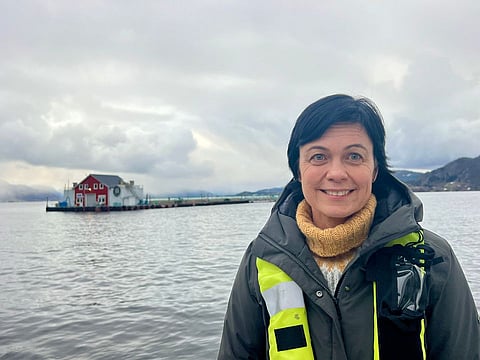


Ingunn Sommerset, Department Director for Fish Health and Welfare at the Norwegian Veterinary Institute.
Photo: Norwegian Veterinary Institute

Mortality among farmed salmon during the sea phase in Norway fell to an estimated 14.2% in 2025, down from 15.4% the previous year and 16.7% in 2023, according to new figures from the Norwegian Veterinary Institute (Veterinærinstituttet).
The institute said the calculations, based on monthly reports submitted by fish farmers to the authorities, show the national mortality rate dropping below 15% for the first time in several years. Several industry actors have previously reported lower losses in 2025, and the institute said its analysis supports what it described as a positive trend.
“It is important that the systematic work to improve fish health and welfare continues, so that we can see a lasting decline,” said Ingunn Sommerset, Director of the Department of Fish Health and Welfare at the Norwegian Veterinary Institute.
In absolute terms, the number of farmed salmon deaths reported in 2025 was 54.9 million, compared with 57.8 million in 2024 and 62.8 million in 2023. The institute noted that a sharp rise in losses recorded under the category “Other” in 2024 had raised questions about how mortality figures were affected by reporting practices. As this category, which is excluded from the mortality calculations, remained at a similar level in 2025, the institute said the year-on-year reduction in deaths could not be attributed solely to changes in reporting.
The figures may still be subject to revision, as late reporting could lead to minor adjustments to the 2025 totals, the institute noted.
Although the figures showed an overall decline, mortality levels varied substantially between different regions and production areas.
The largest improvement was recorded in production area 6, covering Nordmøre and South Trøndelag in Central Norway, where mortality fell from 22.3% in 2024 to 14.6% in 2025. The sharpest increase was seen in production area 9, from Vestfjorden to Vesterålen in northern Norway, where mortality rose from 9% to 16.1% over the same period. Production area 3, stretching from Karmøy to Sotra in Western Norway, showed a steady reduction over three years, with mortality falling from 25.7% in 2023 to 15.2% in 2025.
According to the institute, the annual mortality figures are calculated by aggregating average monthly mortality rates, a method designed to account for fluctuations in stock levels over the year. The resulting annual mortality risk, given as a percentage, is intended to provide an indicator of fish health and welfare at farm level.
Sommerset said further analysis of the 2025 mortality figures, alongside other factors affecting the health and welfare of Norwegian farmed fish, would be presented in the forthcoming Fish Health Report, which is due to be launched at an open event in Bergen on 11 March.
In 2023 Norway recorded its highest-ever mortality rate of sea-phase salmon, reaching 62.8 million, and prompting calls for serious action on fish health and welfare.
Last year, veterinary associations and fish health experts from across Norway have called for stricter regulation on mortality and proposed incentivising better fish welfare by permitting only the 25% top-performing operators within each production area to grow their operations.
As part of its reform of aqauculture regulation confirmed in 2025, the Norwegian government is aiming to cut fish mortality to 5%, bringing in penalties for high mortality while rewarding welfare-focused operations.
