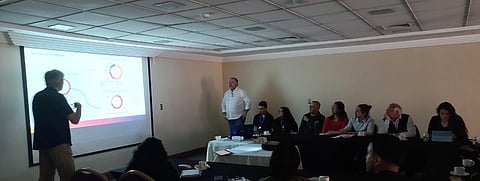


The meeting was led by the Undersecretariat for Fisheries and Aquaculture (SUBPESCA).
Subpesca

Chile's Undersecretariat for Fisheries and Aquaculture (SUBPESCA) met with public institutions to present and analyze the results of the FIPA 2024-01 study, Circular Economy Strategies for Fisheries and Aquaculture in Chile, which promotes the sustainability of the national fisheries and aquaculture sector.
Among the proposals cited to boost the circular economy are improvements in waste classification and traceability, as well as advances in the valorization of by-products, with a focus on resource utilization.
During the meeting, progress was also presented on losses and waste estimation, and logistical, economic, regulatory, and technical gaps identified in artisanal and industrial fisheries, salmon farming, and mussel farming.
The event included the participation of representatives from INDESPA, DIRECTEMAR, SERNAPESCA, IFOP, the Ministry of the Environment (MMA) through its Circular Economy Office, and the SEREMI of the Environment for the Valparaíso Region.
"These meetings are key to validating and strengthening the study’s results at an early stage, gathering technical feedback, and consolidating effective inter-institutional coordination, all with a view to advancing toward a national diagnosis and concrete action lines on circular economy for the fisheries and aquaculture sector," said Alexis Gorigoitia, professional at the Aquaculture Process Analysis and Management Unit and coordinator of circular economy-related issues at SUBPESCA.
In line with this policy, the National Fisheries and Aquaculture Service (Sernapesca) launched in June 2025 the Responsible Consumption Program, 'Blue Seal,' which certifies products from establishments based on legality and sustainability criteria.
