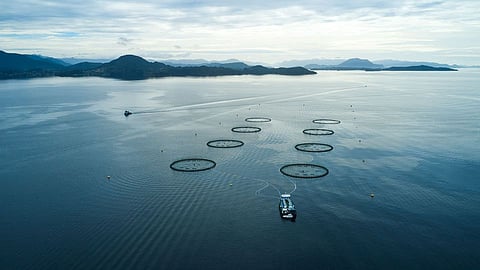


Mattilsynet is responsible for oversight of fish health and biosafety in Norway's aquaculture sector.
Photo: Mattilsynet

Parts of Norway’s aquaculture sector have improved their internal management systems in recent years, but weaknesses in how fish welfare requirements are applied remain widespread, according to the Norwegian Food Safety Authority (Mattilsynet).
The regulator said it reached this conclusion after carrying out 20 system audits of aquaculture companies during 2024 and 2025. The reviews focused on assessing whether aquaculture companies have effective systems, routines, and internal controls to meet regulatory requirements for fish health and welfare.
The 20 audited companies covered some of the Norwegian aquaculture industry's major players, including Mowi, Leroy Seafood, and SalMar, audited in 2024, and Cermaq, Hofseth, and Måsøval among those audited in 2025.
According to the authority, the audits combined reviews of corporate-level management systems with on-site inspections at around 10–15% of each company’s production locations. These verification visits were intended to assess whether company-wide plans and routines were reflected in day-to-day practices at farm level.
“There have been improvements, and we are experiencing good dialogue around the system audits. At the same time, we still see too little systematic and preventive work. The industry therefore still has some way to go,” said Irja Viste-Ollestad, head of the Department for Innovation, Methods and Analysis in the authority’s aquaculture inspection division.
Mattilsynet reported wide variation in how well companies understand and implement the regulatory framework, with audits revealing several recurring issues.
Welfare objectives were often absent or vague, with performance targets more commonly linked to production outcomes. Meanwhile, the authority said, risk management was "fragmented", with few companies maintaining a comprehensive and up-to-date overview of welfare risks.
Mattilsynet also found that non-compliances were frequently closed without thorough analysis of underlying causes, which the authority said limited organisational learning. In addition, welfare data was often collected but rarely used systematically to inform management decisions.
“Taken together, this makes it more difficult to prevent incidents or reduce their severity when they occur,” Viste-Ollestad said.
At the same time, the regulator noted that some operators had taken steps to address these shortcomings. It said several companies had improved their approaches to identifying root causes behind deviations, strengthened planning and internal controls, and begun to make more structured use of welfare data. Updates to biosecurity plans and other management documents were also reported.
“It is encouraging to see operators who take this seriously. That effort makes a difference both for the fish and for trust in the industry. If the aquaculture industry is to be sustainable over time, more companies must work in a more systematic and proactive way with risk management,” Viste-Ollestad added.
The Norwegian Food Safety Authority said it plans to carry out further system audits in 2026, with details of the companies involved to be announced at a later date.
In recent days, Mattilsynet announced it is preparing a new set of animal welfare rules for the aquaculture sector, with entry into force planned for January 2027.
The proposed regulation will apply across the aquaculture value chain, covering farming facilities, transport operations, processing and related activities. The authority says the aim is to strengthen animal welfare by bringing together provisions that are currently spread across several different regulations and revising them in light of updated scientific knowledge.
