Advertisement
aquaManager - Book a Demo

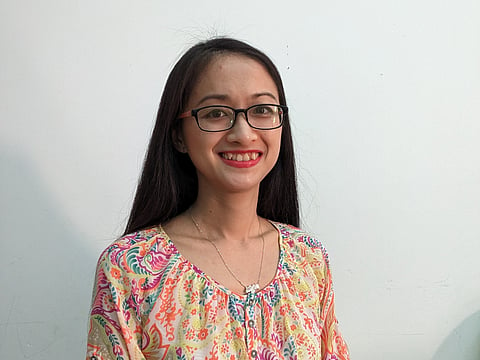
TalentView: Lien-Huong Trinh, Shrimp Welfare Project

Lien-Huong Trinh, Director of Programme Implementation at Shrimp Welfare Project, discusses her route from human rights work into aquaculture, and the practical challenge of taking humane slaughter from principle to practice in global shrimp farming systems.
Lien-Huong Trinh, Shrimp Welfare Project. Through the Humane Slaughter Initiative, the SWP provides free electrical stunners to eligible shrimp producers around the world.

Lien-Huong Trinh, Shrimp Welfare Project. Through the Humane Slaughter Initiative, the SWP provides free electrical stunners to eligible shrimp producers around the world.

Photo: Shrimp Welfare Project

Published on

When Lien-Huong Trinh began working in aquaculture four years ago, she was entering unfamiliar territory. Her background was not in seafood, farming or animal welfare, but in social sciences and human rights. In her early career, she worked with non-profits and research institutes on women’s rights, children, access to education and migrant workers.

“In this current role, it’s the first time that I am working on aquaculture, still nonprofit, but a totally different area,” she tells WeAreAquaculture.

Today, Lien-Huong is Director of Programme Implementation at the Shrimp Welfare Project, where she oversees producer engagement and programme implementation for the organisation’s Humane Slaughter Initiative. The initiative advocates for the use of electrical stunning to reduce suffering in farmed shrimp at slaughter, and works with producers, suppliers and retailers to support implementation across different farming regions.

For Lien-Huong, the move into shrimp welfare was a shift in subject matter, but not entirely in purpose. “It’s still about advocating for a cause and working with stakeholders to make changes happen,” she explains.

What she found was an industry that was complex, varied and fast-moving.

“When we work with aquaculture people, it is fast changing, extremely dynamic, very diverse across regions, even vertically within the industry,” she says. “When I worked with small-scale farmers and smallholders in Vietnam at the start of my job, and now today when I'm working with more large-scale or corporate producers, even retailers in the last two years, there is a diversity within the industry itself.”

“The way people think, people act, people make decisions were totally new to me. And yeah, it was very exciting. The learning curve has been steep.”

<div class="paragraphs"><p>Lien-Huong Trinh with colleagues and farmers on a site visit.</p></div>

Lien-Huong Trinh with colleagues and farmers on a site visit.

Photo: Shrimp Welfare Project

Learning the language of shrimp farming

“Ultimately communication, to me, has to be rooted in knowledge and understanding,” she says. “Coming from outside of aquaculture, I think the first thing that I did in this job four years ago was to try to learn as much as possible about aquaculture, shrimp farming in particular, starting from Vietnam.”

Over time, her knowledge expanded from Vietnam to other Asian producing countries such as India, Indonesia, Sri Lanka and Thailand, and then to Latin America and Africa – and with it, her ability to build relationships and secure participation from producers.

“I started to speak in the same language with the people in the industry, understanding their challenges and the factors they consider when they make decisions, when they decide whether and to what extent they would like to join the programme,” she says.

“When I understand people's work, people's concerns, their challenges, what they care about, what's important to them, then it is much easier to work with people, to convince them to come on board and even to be their companion when they move along on this journey of introducing a new technology or a new welfare practice into their production system.”

From Vietnam to global reach

Lien-Huong’s current work focuses on producer-related activities within the Humane Slaughter Initiative, including recruiting new producers to the programme and ensuring that electrical stunning is implemented properly in different farming systems and regions.

Her role has changed significantly since she first joined the organisation. She began as Vietnam programme coordinator, working on interventions with smallholders, including farm management practices and water quality, “basically the living environment for shrimp,” she explains.

As the organisation identified humane slaughter as a potentially high-impact intervention, her work shifted towards corporate engagement, Southeast Asia coordination and then broader implementation worldwide. This meant working with retailers, seafood suppliers and producers in both producing countries and retail markets in Europe. 

More recently, however, she has focused on engagement at farm level. “For the last four years, I have been working a lot in the field, boots on the ground,” she says, but engagement with retailers and suppliers remains crucial to the success of the Shrimp Welfare Project.

“From the retailer side, they definitely set the momentum. They have the influence and give their suppliers, the people who directly handle shrimp, a concrete motivation to adopt changes when they have a clear demand and a clear commitment with a timeline,” she says. “Then the people who produce shrimp have a clear pathway to pursue, to adopt these practices.” 

Retailers definitely set the momentum. They have the influence and give their suppliers, the people who directly handle shrimp, a concrete motivation to adopt changes.
<div class="paragraphs"><p>The SWP's Humane Slaughter Initiative provides electrical stunners free of charge to producers that meet the programme’s requirements.</p></div>

The SWP's Humane Slaughter Initiative provides electrical stunners free of charge to producers that meet the programme’s requirements.

Photo: Shrimp Welfare Project

Bringing shrimp welfare from principle to practice

At farm level, however, implementation can be complex.

“The more we work with producers or in different farming systems, we realize that humane slaughter is not just about an equipment or just introducing a technology into the production system,” Lien-Huong says. “It’s a process: how shrimp are handled before stunning happens and what happens after they have been stunned, setting the right parameters for the equipment, all these elements matter. And farmers need a lot of guidance and support to implement it at the farm level.”

One of the main challenges, Lien-Huong says, is introducing change into long-established farming practices. “Farms in Asia, Latin America and Africa all have very well-established processes that have been settled for decades on how they slaughter the shrimp. If they are going to European markets, then chill kill is a common practice. And then if they are selling to domestic markets, then there's a big variation,” she explains.

“I think the challenges for producers and also for a nonprofit like us is how to integrate this extra step, this new equipment, into this very well-established process, with a consideration to cost-effectiveness and efficiency, which are always a strong topic for producers, for industry stakeholders.”

The Shrimp Welfare Project supports eligible producers in two main ways: by providing electrical stunning equipment, and by offering technical guidance on how to integrate it into harvest and slaughter processes.

“These two strategies always go hand in hand,” Lien-Huong says. “So it's not either/or, it's both at the same time.”

The organisation provides electrical stunners free of charge to producers that meet the programme’s requirements. These may be dry or wet stunners, depending on the system. However, producers also take on part of the cost and responsibility. While Shrimp Welfare Project pays for the equipment itself, producers cover shipment, taxes, customs fees and any operational changes required on site.

“When they introduce this into their harvest process, there are also extra costs,” Lien-Huong explains. “For example, they might need to use more ice or they would need to get some manpower to operate the machine. All these belong to their operation costs.”

“It’s also quite some responsibility on the part of producers, which we highly appreciate because they really put an effort in working with us to improve welfare in their system.”

What implementation looks like on the farm

For Lien-Huong, implementation is not a remote process. The programme team aims to be present from the beginning, working with producers and equipment manufacturers during installation and commissioning.

“We try to go to the majority of farms from day one. We are there with them when the manufacturers send a field service engineer to the farm to install and to commission the stunners,” she says.

“We are there with the farm and with the manufacturer to make sure that not only these machines are safely installed and tested for safety for the human who operates the machine, but also to guide them in how to assess the quality of the stunning effect, how to observe shrimps, how to make sure that welfare is best protected throughout the process.”

That can mean looking at how shrimp are handled before stunning, which electrical parameters are suitable, whether the animals are fully stunned, whether product quality is affected if unsuitable parameters are used, and what happens after the shrimp leave the stunner.

Until recently, much of this fieldwork was carried out by Lien-Huong herself, but the team has since expanded to include two technical field coordinators, one based in Vietnam and one in Ecuador, with whom she works closely to ensure quality of the implementation. 

The relationship with producers continues after installation, with the team checking in on any challenges and providing support where needed. For Lien-Huong, this ongoing contact is also part of how trust is built. 

“The way we build trust here is really to understand, to talk to producers, to understand the challenges as much as possible,” she says. “Talk to them, observe the process, listen to their feedback, check in with them frequently. Be very practical with them on what's going on with the machine, with the process, and be a bridge between them and equipment manufacturers.” 

“We make sure that we are responsive immediately when we are needed, when our support is needed.”

I have been able to develop wonderful relations across the value chain and I'm so impressed by how open-minded people are.
Aerial view of large shrimp farms in the coastal region of Giao Thuy, Vietnam.

Aerial view of large shrimp farms in the coastal region of Giao Thuy, Vietnam.

Photo: Adobe Stock.

A growing international programme

The Humane Slaughter Initiative has now reached producers in several major shrimp farming regions, having signed 33 memorandums of understanding with 30 producers worldwide.

In Asia, the programme has collaborators in Vietnam, Thailand, Indonesia, India and Sri Lanka. In Latin America, it works with producers in Honduras, Ecuador and Venezuela, while in Africa it has one participating farm in Nigeria.

On the market side, Shrimp Welfare Project engages with retailers in the UK and several continental European countries, including France, Spain, Germany and the Netherlands.

“When all these 33 stunners are in full-scale operation, then we expect to help almost 6 billion shrimps per year on average. When we talk about shrimp in the industry, we talk about tonnage. But as animal welfare advocates, we also try to measure our impact in the number of individuals.”

During the early years of the programme, Lien-Huong says, growth was rapid. While the organisation is still aiming to bring in new producers, the next phase is also about ensuring that implementation is robust and adapted to different production contexts.

“For Humane Slaughter Initiative, we would like to focus on ensuring that the quality of electrical stunning being implemented on farm sites is optimized, ensuring that protocols that we recommend to producers are properly implemented, working with them to understand their challenges, to find solutions, and coming up with good practices that can be shared, can be disseminated to different stakeholders in the industry in different countries,” Lien-Huong explains.

The need for more specialised solutions has become clear as the programme has expanded. Farms in Vietnam, India, Honduras and Ecuador may differ in harvest frequency, infrastructure, available space, manpower and resources.

“The next big goal that I and also my team members in the Humane Slaughter Initiative are aiming for is to ensure that regardless of these farming models, resources and infrastructure that farms all vary, we will still be able to ensure that animal welfare is best protected,” she says.

That ambition also connects with the broader aquaculture certification landscape. While Shrimp Welfare Project does not intend to become a certifying body itself, it is participating in Aquaculture Stewardship Council's Shrimp Technical Working Group to exchange knowledge, with electrical stunning already forming part of their evolving farming standards.

When all these 33 stunners are in full-scale operation, then we expect to help almost 6 billion shrimps per year on average.
<div class="paragraphs"><p>Lien-Huong Trinh discusses installation of new stunning equipment during a site visit.</p></div>

Lien-Huong Trinh discusses installation of new stunning equipment during a site visit.

Photo: Shrimp Welfare Project

Taking a wider view of shrimp welfare

After several years working closely with producers in the field, on site visits and commissionings, Lien-Huong sees her own role gradually becoming more strategic.

“Throughout all these years of working with the aquaculture industry, I have learned so much. I still learn new things day by day in this job whenever I travel to a new farm or to a new country to work with producers,” she says.

“I'm super grateful that I have been able to develop wonderful relations across the value chain and I'm so impressed by how open-minded people are,” she says. “I totally understand that as producers, they have so many things to worry about, they have their priorities, but then they put so much effort in working with nonprofits like us to help the animals in their production system.”

In future, she says, she would like to take more of a “360-degree, bird's-eye view” of what is happening across countries and regions and develop strategies to bring the programme’s quality “to the best it could be”.

“I see there's still a lot of work to do to bring humane slaughter to different farming regions, different countries,” she says.

“We believe that when we have even more countries joining the programme, then we can mainstream humane slaughter in the industry - that would be the ultimate goal.”

logo
WEAREAQUACULTURE
weareaquaculture.com