

"Today, trust and responsibility are at the center of how people choose their food—and how we at SSP understand shrimp production," said Pamela Nath, Director of SSP.
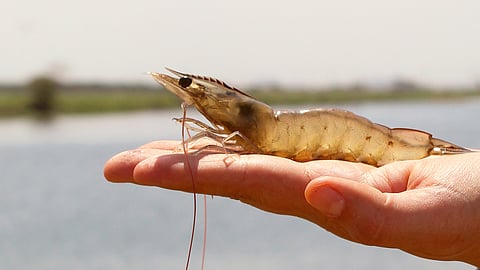
Photo: Sustainable Shrimp Partnership.

In June of last year, the Sustainable Shrimp Partnership (SSP) announced the launch of a project to measure and validate that workers on SSP shrimp farms in Ecuador receive a living wage. Developed in collaboration with IDH—an international foundation that brings together public and private stakeholders to make global agricultural markets more sustainable and inclusive—, the results now presented through a case study demonstrate that, indeed, measuring living wages in Ecuadorian shrimp aquaculture is feasible.
At the beginning of the project, the Program Manager for Aquaculture at IDH, Marjol van der Linden, explained that accurately measuring living wages using real-world data was a crucial step towards ensuring fairer labor conditions. "It allows us to pinpoint specific gaps and, most importantly, provides a solid foundation for meaningful action," she then said.
As SSP now notes in its release on the results, according to the International Labour Organization (ILO), a living wage is the level of remuneration necessary to ensure a decent standard of living for workers and their families, taking into account national circumstances and the work performed during normal working hours, excluding overtime.
Moreover, according to the Global Living Wage Coalition (GLWC), this includes adequate access to food, water, housing, education, healthcare, transportation, clothing, and other essential needs, as well as a provision for unexpected events.
To verify whether these conditions are being met in the shrimp industry of Ecuador, the case study analyzed the measurement of living wages in three shrimp farms, members of the Sustainable Shrimp Partnership: Chongón, farm of Corporación Lanec; Achugran, of Omarsa; and Marfrisco, of Promarisco.
Using 2024 payroll data and the IDH Salary Matrix tool, based on the Anker methodology, their compensation schemes were evaluated by comparing their workers' income with the actual cost of living in their area. The results were then verified through third-party audits.
The three SSP member farms successfully met or exceeded the applicable living wage benchmarks in their region. Furthermore, the project also strengthened their capacities and established a technical basis for future measurements.
However, beyond the results of the three farms analyzed specifically, the importance of the case study lies in the fact that it showed that measuring living wages is viable in the Ecuadorian context, thanks to a strong labor framework and the availability of information that facilitates this type of evaluation.
"As the world's leading shrimp exporter, Ecuador has both the opportunity—and the responsibility—to lead in sustainability, playing an active role in redefining what product quality means today. The SSP farm case study confirms that it is possible to integrate verifiable criteria such as living wages into production, allowing the industry to differentiate its value proposition in markets that increasingly prioritize social well-being," stated José Antonio Camposano, President of Ecuador's National Chamber of Aquaculture (CNA).
"Living wages are becoming an increasingly clear expectation within responsible business and across supply chains. More organizations are making commitments in this area, as demands for transparency around working conditions continue to grow," Sonia Cordera, Director of Market Engagement at IDH, explained.
"The SSP case study shows that it is possible to make practical progress on this issue by measuring and managing living wages in a structured way, offering a model that can be replicated both in shrimp aquaculture and across other industries," she continued.
According to the Sustainable Shrimp Partnership, by presenting this evidence that indicates that it is possible to measure, verify, and demonstrate compliance with living wages on shrimp farms, as the world's leading producer and exporter of shrimp, Ecuador is marking a milestone.
"Today, trust and responsibility are at the center of how people choose their food—and how we at SSP understand shrimp production. The experience of Ecuadorian shrimp offers a lesson for the entire seafood industry: it is possible to provide nutritious, high-quality food while also taking care of people," said, for her part, Pamela Nath, Director of SSP.
"Product quality is no longer defined only by the product itself, but also by how it is produced—and living wages are part of that standard. This is a path we now know can be followed and, more importantly, one that must be started," she added.
Since the business organization began its journey to transform the future of shrimp aquaculture in Ecuador eight years ago, leading by example in shrimp farming has been a strategic pillar of the SSP. Now, as a next step, it will seek to broaden this approach and integrate living wages as a formal criterion within its member standards, progressively extending its reach to other stages in the value chain.
Those interested in discovering the next steps suggested by the Sustainable Shrimp Partnership to expand the project's impact within its members can do so in the images below (in English in the first and in Spanish in the second).
