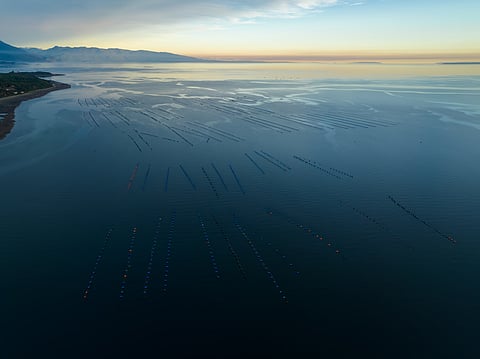


Aerial view of mussel farming in the Los Lagos region, Chile.
Photo: Adobe Stock.

A new project aiming to improve the competitiveness and added value of mussel farming in Chile’s Los Lagos region has been launched by the University of Santiago, funded by the regional government with support from the National Fisheries and Aquaculture Service, Sernapesca, and industry body AmiChile.
According to the organisers, the project is intended to strengthen the mussel farming value chain in Los Lagos through knowledge transfer, collaboration with producer communities and the creation of an integrated traceability platform.
The programme got under way on 8 April with a field visit touring mussel farms to observe seed planting and harvesting operations, before visiting a mussel processing plant to follow the production chain through to export preparation. The first workshop of the programme was held the following day.
Sernapesca national director Soledad Tapia Almonacid said the initiative could help improve both the competitiveness and sustainability of a sector that is important to the region.
“Providing financing to promote a more competitive and sustainable mussel farming sector is a great support for the production sector," she said via a news release.
"At Sernapesca, we not only oversee but also support our clients in ensuring regulatory compliance throughout the entire production chain, from seed planting to export, and in the process of meeting the demands of new markets,” she added.
Regional governor Alejandro Santana Tirachini said mussel farming in the Los Lagos region accounts for about 99% of Chile’s national production, supports more than 17,000 jobs and generates exports worth more than US$300 million each year. He added that the sector currently involves more than 1,400 stakeholders using multiple systems, generating more than 115,000 transactions and numerous in-person procedures, which he argued affects competitiveness.
Santana said the CLP 300 million (approx. USD 336,000) project "will allow us to develop a single, intelligent, and interoperable digital traceability system, incorporating tools such as artificial intelligence, automatic alerts, and direct support for producers."
"This initiative will not only reduce costs and time but will also position our region as a leader in aquaculture innovation," he argued.
