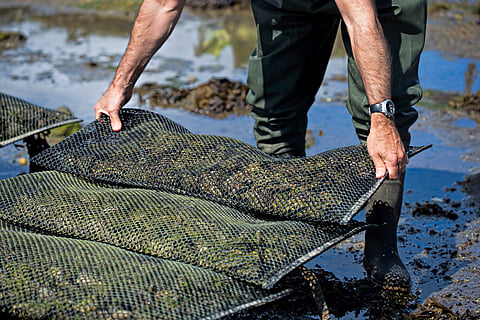


Oyster bags are routinely being used well beyond their expected lifespan through repairs and reuse, the BIM study found.
Photo: Adobe Stock

Ireland’s aquaculture sector is making progress in reducing waste and extending the lifespan of equipment, according to a new report from seafood development agency Bord Iascaigh Mhara (BIM)
The Aquaculture Legacy Gear Survey Report 2025, carried out under BIM’s Clean Oceans Initiative, is the first comprehensive national assessment of end-of-life aquaculture gear in Ireland. The survey gathered information from 188 marine aquaculture producers, representing around 72% of the country’s marine aquaculture production units across the rope mussel, Pacific oyster and marine finfish sectors.
The report identified approximately 662 tonnes of end-of-life aquaculture legacy gear nationwide, around 60% of which - approximately 395 tonnes - was recyclable plastic used in aquaculture operations.
BIM said the findings show that aquaculture farmers around the Irish coast are already applying circular economy principles through the repair, repurposing and reuse of equipment.
According to the report, oyster bags are routinely used beyond their expected lifespan through repair and reuse, while mussel barrels can remain operational for more than 20 years. Fish pens, meanwhile, can last around 15 years with ongoing maintenance and refurbishment, BIM said.
The report also found that, because much aquaculture equipment has a long operational life, the volume of material reaching end-of-life each year remains manageable. BIM said this provides “a realistic pathway” for long-term recycling systems for the sector.
The survey mapped where end-of-life aquaculture gear is clustered around the coast, information that BIM said could help guide regional collection systems and shared recycling infrastructure between aquaculture and fishing communities.
Mary Hannan, Regional Aquaculture Development Executive at BIM, said the research provides a clearer picture of the scale and location of legacy gear in the sector.
“For the first time, BIM has carried out a survey quantifying the type and location of aquaculture legacy gear,” Hannan said. “This will help inform waste management options for the future.”
BIM said aquaculture producers expressed strong support for potential new recycling and recovery systems. The agency added that the report provides a foundation for future strategy, investment in regional recycling infrastructure, and pilot projects to help coastal communities transition towards more sustainable long-term waste management practices.
The full report can be accessed online here.
