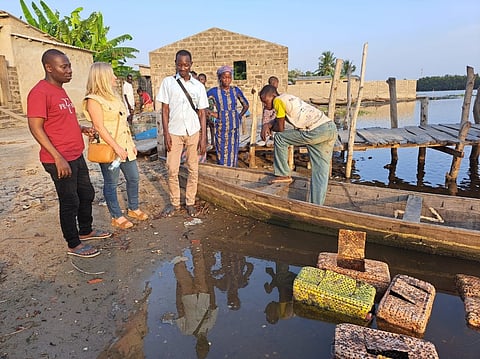


The main reproductive period is between December and April.
IEO-CSIC

The Spanish Institute of Oceanography (IEO-CSIC) has carried out an international scientific cooperation project to promote the sustainable cultivation of the oyster Crassostrea tulipa in the coastal lagoon of southern Benin, in West Africa.
The studies analyse the abundance, survival, and spatial distribution of the different larval stages of the species, as well as their relationship with environmental factors such as salinity, temperature, and water transparency.
The research has shown that there is a main reproductive period between December and April, coinciding with the dry season. In addition, some areas show a high production of larvae, while others offer more favourable conditions for their development to advanced stages, a key factor for the success of oyster farming.
"We have been able to define optimal seed collection calendars, identify priority areas for cultivation, and guide more sustainable aquaculture strategies, thereby helping to reduce pressure on natural oyster populations," noted María Carmen García Martínez, researcher at the Oceanographic Centre of Málaga and leader of the project.
For many communities living around the coastal lagoon of Benin, this resource represents a fundamental pillar of their economy, and many women are actively involved in its harvesting and cultivation. Thanks to this initiative, these communities will be better able to cope with environmental and climate changes.
"We have been able to train staff from the Institut de Recherches Halieutiques et Océanologiques du Bénin (IRHOB) to monitor key environmental variables for oyster farming. This activity is the basis of the local economy and is mainly carried out by women. We intend to continue this collaboration through training and research projects," added García.
