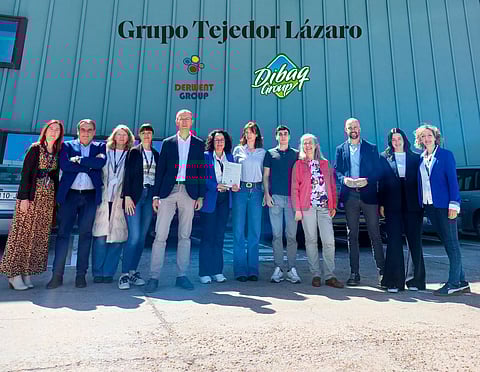


Grupo Tejedor Lázaro is the parent business group (holding company).
Grupo Tejedor Lázaro

Dibaq Aquaculture, company specialized in the aquaculture sector, primarily focused on fish feed and nutrition, has been certified by the Aquaculture Stewardship Council (ASC) for aquaculture.
Dibaq Aquaculture is not an independent company, but a brand/business unit within the Spanish Grupo Tejedor Lázaro, which was responsible for publishing this news on its LinkedIn profile.
In 2024, it became the first company in Spain and the only one in continental Europe to obtain BAP (Best Aquaculture Practices) certification for its aquaculture feed.
This milestone confirms that Dibaq carries out responsible and rigorous animal feed production, aligned with the highest international standards. The official certification was presented at the Dibaq Group facilities in Fuentepelayo (Segovia), Spain.
"The achievement of this certification is the result of extensive prior work, preparation, analysis, and continuous improvement. Therefore, we would like to extend a very special congratulations and thanks to the Dibaq Aquaculture team, the Dibaq Group Quality team, and the Derwent Trading & Partners team (Derwent Group), whose involvement and collaboration have been key throughout the entire process," the statement reads.
A month ago, ASC launched a 30-day public consultation on how aquaculture operations can function responsibly within or close to protected areas, as part of its work addressing biodiversity and habitat risks associated with fish farming.
The aim was to gather views from industry, conservation groups, researchers and other stakeholders. ASC says the feedback will inform new guidance aimed at addressing environmental risks to biodiversity, habitats and ecosystem processes in protected areas.
