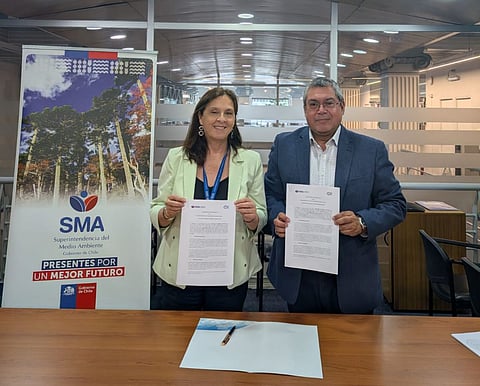


This is an initiative led by the Superintendence of the Environment (SMA) and the Fisheries Development Institute (IFOP).
SMA

The Superintendence of the Environment (SMA) and the Fisheries Development Institute (IFOP) have signed a collaboration agreement aimed at strengthening environmental oversight of the aquaculture sector in Chile.
IFOP works toward the development of a sustainable fisheries and aquaculture sector by providing scientific and technical knowledge to support public policy decision-making, particularly through the Undersecretariat of Fisheries and Aquaculture (SUBPESCA).
A key aspect of this agreement is the commitment to exchange oceanographic data relevant to environmental management in aquaculture. This will allow access to updated information and support the operation of farming centers.
Regarding this initiative, Superintendent Marie Claude Plumer stated: "This alliance allows us to strengthen environmental oversight of the aquaculture sector based on technical information and scientific evidence, improving our ability to anticipate risks, focus inspections, and better safeguard the country’s marine ecosystems."
The institutions plan to jointly carry out studies on harmful algal blooms (HABs) and on the assessment of environmental effects caused by natural events.
This collaboration will also help improve the online connectivity of the Salmon Fattening Centers (CES) and support the creation of new environmental monitoring projects.
Furthermore, to strengthen the skills of professionals and technicians involved in environmental oversight and marine environment monitoring, training and technical education programs will be implemented.
Lastly, IFOP and the SMA will remain continuously connected through a permanent technical working group to coordinate joint initiatives, define work priorities, and review results.
