TalentView
TalentView: Marc Turano, Innovasea
Innovasea’s General Manager of Aquaculture Systems discusses his path from marine biology to aquaculture technology, and why data-driven tools still need to prove themselves on the farm.

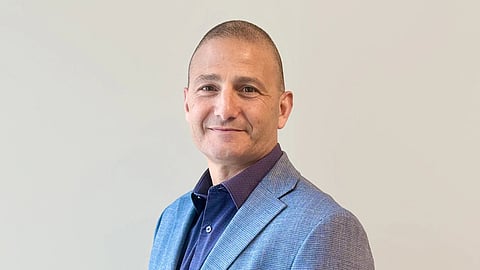
Marc Turano, General Manager of Aquaculture Systems at Innovasea.
Photo: Innovasea

Marc Turano’s long and varied career in aquaculture has taken him from marine biology and university research to equipment, feed, sales, and technology.
In 2025, he was appointed Innovasea’s General Manager of Aquaculture Systems, an expanded role in which he oversees key business, strategic and commercial decisions across the company’s aquaculture systems business.
Having previously led Innovasea’s land-based aquaculture group, he now brings his broad perspective to a sector increasingly being transformed by data, automation, AI-enabled technologies – as well as the search for more resilient ways to farm fish.
Marc, however, believes the future of aquaculture is not simply about the sensors, cameras or software platforms used by farms, but instead lies in making sure these advanced tools work in real production environments, helping people make better decisions at the farm level.
“Technology will not replace producers. However, I think using proper data is great to help them make decisions,” he tells WeAreAquaculture.
Marc recalls he was first attracted to study aquaculture for its practicality, and initially it led him into applied research. After completing his academic training in marine biology followed by a PhD, he spent more than a decade working in roles bridging academic research and the aquaculture industry in North Carolina, including as a mariculture specialist with North Carolina Sea Grant and as Director of North Carolina State University’s Marine Aquaculture Research Center.
At NC State, his work included applied research on marine and brackish aquaculture systems, including RAS design, water quality, and nutrition. With North Carolina Sea Grant, he worked more directly with commercial aquaculture operations.
“You’re kind of the swing between the researchers and the producers,” he explains. “Scientists would do research; the extension people would help translate that to the practical application on the farm. And then I would be on the farm talking to the producers and translating their problems back to the researchers to say, ‘Hey guys, what kind of trials can we do to help?'”
Marc’s early career experience of moving between science and farming has remained central to how he thinks about aquaculture technology today. It also set the stage for later roles in the private sector, first with Pentair, where Marc worked in aquaculture equipment and design, ultimately becoming global sales manager. He then joined Cargill EWOS, returning in some ways to his academic roots in fish physiology and nutrition, before joining Innovasea, where he has now worked for over four years.
“I didn’t start in the business world,” he says. “I’m a scientist at heart. But you’d be amazed at how many things I learned in science that apply to business. Numbers are numbers, and data analytics works whether you’re in the business world or analysing fish growth data.”
At Innovasea, Marc’s current focus is broad, covering a range of technologies and markets. But he sees one central theme tying the company’s work together: the integration of the hardware on the farm with the software that makes sense of the data.
In developed aquaculture markets, particularly the salmon sector, Marc explains, Innovasea has seen traction with environmental monitoring systems linked to its software platform. Biomass cameras are another area of focus, while the longer-term goal is to keep improving the analytical capabilities.
“With all of the conversations about AI and data, customers are asking for a lot of different things when it comes to tech now. We have a very successful platform, but really bolting on the analytical side of it is important to me going forward.”
In warm-water regions, he notes, the market is often at an early stage in terms of technology adoption. There, part of the task is to introduce environmental monitoring equipment and camera systems already more familiar in cold-water aquaculture. Innovasea’s acquisition of Aquanetix, whose farm management software has been used in the Mediterranean, has also helped establish a base in warm-water markets, he adds.
But whether in cold-water or warm-water production, Marc argues that the broader industry challenge is similar: producers are under pressure to improve efficiency and make better use of the information generated on farms.
The aim, he says, is to provide producers with "the right information, in the right place, at the right time," to support better decision making.
“It really starts with reliable, robust hardware that feeds data into a platform that’s easy to use,” he says. “Then you can start to apply the artificial intelligence on top of it.”
Innovasea's senior leadership team. From left to right, Mark Jollymore, Marc Turano, Amy Brookman, Tim Stone, George Nardi, and Jean Turpin.
Photo: Innovasea.
Like many technology companies working in aquaculture, Innovasea is seeing strong interest in AI, automation, and real-time monitoring. Marc adds that the requests are “fast and furious,” particularly from the salmon sector, which he sees as being ahead both in adoption and in willingness to test new tools.
However, he is also cautious about overstating how quickly the industry will commit. The sector is still learning what it wants from digital technology, and both producers and suppliers are discovering that some ideas that look useful in theory may need to be reworked once they are deployed on farms over the longer term.
“When it’s deployed for weeks, months at a time, you start to see that it might be a little bit difficult to use in this environment,” he says. “Or we like the data, but we’d like to see it a different way.”
Employee pictured with an Innovasea biomass camera.
Photo: Innovasea
“We get a lot of customization requests... People are interested, they’re excited, they want to try this stuff, but it’s not exactly what they want every time.”
As a younger, more tech-savvy generation enters the aquaculture workforce, adoption may increase, but Marc foresees a gradual "additive and facilitative" use of technology rather than an "all-in, all-at-once" solution, where scalability will also be key in what remains a highly cost-sensitive industry.
One reason to be cautious about technological promises is that aquaculture sites are difficult places to deploy equipment. Saltwater, currents, tides, wind, temperature changes, and biological variability all create conditions that cannot be fully understood in an office or laboratory.
“Until you put something out there, it all looks great, and then Mother Nature comes in and exposes where the issues are.”
This need for real-world testing is particularly relevant as aquaculture companies consider farming in more exposed or submerged environments. Offshore aquaculture is often discussed as one route to future growth, particularly as coastal areas become more constrained.
Marc describes offshore regenerative aquaculture as a long-term opportunity, but says the industry has yet to settle on a proven model.
He expects more companies to test offshore systems and believes salmon will probably lead the way because of the scale required for large offshore platforms.
“Can I predict if they’ll be successful? No, I can’t,” he says. “What I will predict is that more and more people will try it.”
Environmental sensing equipment being deployed.
Photo: Innovasea
For Innovasea, much of the future-facing work is connected to submerged aquaculture. Marc sees submerged technologies as important not only for offshore farming, but also for warm-water regions facing increasingly challenging environmental conditions.
“In warm water, we’re seeing issues with algal blooms like everyone else. We’re seeing low oxygen issues, high temperatures, so climate change impacts,” he says. “And then, of course, in a lot of warm water areas, we have hurricanes, typhoons and whatnot.”
This means farms may need to submerge pens during storms or move fish below surface layers when conditions become unfavourable, he says.
“We’ve seen success with our pens when surface water temperatures have gotten so high that fish cannot digest feed, or won’t feed,” he explains. “We’re able to drop them below the thermocline, down into an area that’s better for their growth, and where they can eat and digest.”
But farming below the surface brings its own set of technical challenges: feeding, monitoring and networks all have to operate underwater.
“I didn’t say it would be easy,” he admits, smiling.
One advantage for Innovasea, he says, is its relationship with Cuna del Mar, which allows the company to trial technologies on affiliated farms operated by Blue Ocean Mariculture, Open Blue, and Santomar.
For example, he says, Innovasea has deployed a second version of a fully submerged network connected to feed cameras at a farming site in Mexico, where it has been operating for around a year. Santomar is also preparing to deploy its first SeaProtean pen following earlier deployment of two pens at a farm in the Middle East.
“We are getting real-world testing in these environments, and that’s a luxury a lot of companies don’t have,” he says.
SeaProtean submersible pen.
Photo: Innovasea
Asked what he most wants to emphasise in his current role, Marc returns to the idea of connecting Innovasea’s different technologies while building deeper relationships with producers.
“We’re working to be at the centre of all these products. Bringing them together into a sort of digital platform makes it easier to provide information to people in a timely manner,” he says.
“And we’re going to operate a little slower, I think, going into markets, because I want our development into the markets to be relationship-driven. I want to develop relationships with customers, not just sell products to them.”
