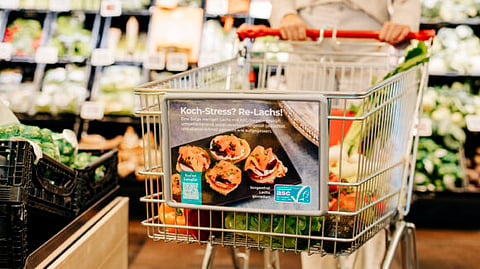


“Consumer expectations are changing... they’re increasingly looking for trusted reassurance about the products they choose,” said Willem de Bruijn, ASC’s chief commercial officer.
Photo: ASC

Consumers are increasingly associating sustainable seafood with health, quality and food safety, according to new global research commissioned by the Aquaculture Stewardship Council (ASC).
The survey of almost 15,000 consumers from 14 countries found that taste, health and quality remain the main considerations when people buy seafood. However, ASC said sustainability is becoming more closely connected with these purchasing priorities.
The findings mark a development from the organisation’s previous global consumer survey, published in 2024, which found that although 83% of consumers said sustainability labels influenced their seafood purchases, only 2% thought about sustainability spontaneously while shopping.
ASC said at the time that consumers needed clearer prompts in supermarkets to bring sustainability to the front of their minds.
The new research suggests recognised certification labels are increasingly performing that role. Independent certification schemes were ranked as the most trusted source of information about seafood and sustainability, ahead of environmental organisations, seafood brands and retailers.
Consumer preference for environmentally friendly products and interest in sustainability claims on food have also risen by more than 10 percentage points since the 2024 study, according to ASC.
“Consumer expectations are changing. People still buy seafood because they enjoy it and recognise its health benefits, but they’re increasingly looking for trusted reassurance about the products they choose,” said Willem de Bruijn, ASC’s chief commercial officer.
“Independent certification has become one of the clearest signals they use to buy with confidence,” he added.
The Aquaculture Stewardship Council's new ecolabel design.
Image: ASC
ASC said the results indicate that sustainability is no longer viewed only as an environmental consideration. Consumers are increasingly treating it as an indicator of product quality, safety and health, the organisation said.
That shift could have implications for retailers and seafood businesses, as certification may help shoppers assess products more quickly in stores and distinguish between competing options.
“One of the most interesting findings is that consumers no longer see sustainability in isolation. They increasingly connect it with the things they already value most – quality, food safety and health,” de Bruijn said. “For retailers, brands and seafood businesses, that makes trusted, independent certification an increasingly valuable way to build consumer confidence.”
The survey also looked at consumer recognition of the ASC eco-label following the introduction of a new on-pack design in March 2026. ASC said the results showed combined awareness of its original and new labels was higher than that of any other farmed seafood certification programme in every market surveyed.
The research was conducted by market research agency The Conversation Studio as part of ASC’s biennial global consumer research programme.
ASC said it plans to release further market-specific findings and analysis for retailers, brands and seafood companies during a webinar on 8 September 2026.
