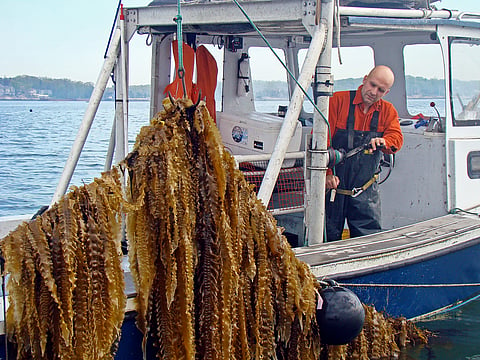


The 2021 winner of the Food Planet Prize was Connecticut-based non-profit GreenWave, which has developed a regenerative ocean polyculture system growing seaweed and shellfish.
Photo: Food Planet Prize / GreenWave

The Food Planet Prize, described as the world’s largest environmental award focused on food systems, is inviting nominations of initiatives linked to blue foods for its 2027 edition.
The organisers are encouraging submissions from a wide range of organisations, including startups, research institutions, cooperatives and non-governmental organisations. Nominations are open globally, and the process is designed to be simple, taking around three minutes to complete.
For the 2026 award cycle, the winner will receive $1.5 million (€1.38m), while finalists will each be awarded $150,000 (€138,000). Although nominations are accepted year-round, projects aiming to be considered for the 2027 prize are advised to submit by mid-May 2026, given the roughly 10-month evaluation process.
Emily Norford, nominations manager for the prize, said the initiative is seeking to broaden representation from the blue foods sector.
“We keep the process deliberately simple and accessible because we want to reflect the full diversity of the global food systems landscape. Blue foods are critical to food security, biodiversity, and climate resilience -- yet they're one of the most underrepresented areas in our selection process. That’s why we would like to amplify our call for nominations," she said.
Awarded annually in Sweden by the Curt Bergfors Foundation, the prize supports projects with the potential to significantly reduce the environmental impact of global food systems. The coordinators say the prize places emphasis on future impact rather than past achievements, thus making it accessible to both early-stage initiatives and established organisations.
Previous winners and finalists linked to blue foods include marine conservation charity Blue Ventures, recognised for community-led fisheries management, the Global Mangrove Alliance, which focuses on reversing mangrove loss, Australian firm FutureFeed, which developed seaweed-based livestock feed to reduce emissions, and Connecticut-based GreenWave, known for its ocean polyculture model of kelp and shellfish.
Further information and nomination submissions can be made via the official Food Planet Prize website.
A coalition of WWF, Conservation International, and The Nature Conservancy, the Alliance works to halt and reverse global mangrove loss.
Photo: Felipe Jacome / Food Planet Prize
