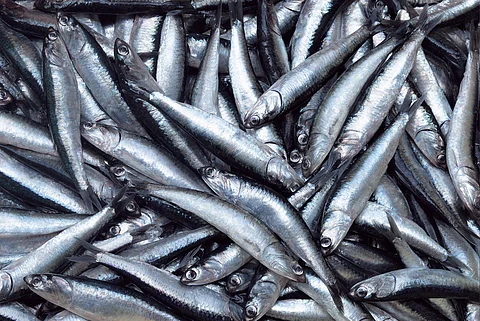


"We are acting responsibly to ensure that anchovy fishing remains sustainable," said César Quispe Luján, Peru's Minister of Production.
Photo: Produce.

As part of efforts to preserve the biomass and ensure the sustainability of the resource, last week, Peru's Ministry of Production (Produce) ordered the temporary closure of the first anchovy fishing season of 2026 in the north-central region of the country. Fishing has been suspended from 00:00 hours on April 24 until 23:59 hours on May 3, 2026.
Following a recommendation from the Peruvian Institute of the Sea (Imarpe), the suspension aims to guarantee spawning and prevent the capture of undersized specimens. Produce emphasized that this ten-day closure is being implemented to protect the resource, ensure responsible and sustainable fishing, and safeguard the livelihoods of thousands of families.
"We are acting responsibly to ensure that anchovy fishing remains sustainable, within the framework of adaptive management. Protecting the resource today means guaranteeing future successful seasons, preserving thousands of jobs, and safeguarding the well-being of the families that depend directly and indirectly on this activity," stated the Minister of Production, César Quispe Luján.
"The sustainability of the resource not only protects the biomass, but also ensures the continuity of the fishing industry, the work of fishermen and the economic security of the entire national production chain," added the head of Produce, specifying that the measure seeks to maintain the balance of the marine ecosystem and strengthen responsible fishing.
According to figures provided by the Peruvian Ministry of Production, as of April 22, 2026, the cumulative anchovy landings in the north-central region had reached 381,181 tons, representing 19.9% of the total allowable catch (TAC) of 1,914,049 tons established in early April—a 36% reduction compared to the previous year. Regarding the sizes observed, the Ministry stated that they ranged from 7.0 to 16.0 centimetres in total length, with a main mode of 12.0 centimetres.
In response, Produce decided to reinforce existing conservation measures by extending temporary closures in strategic coastal areas. Four days later, on April 26, the cumulative anchovy landing reached 439,535 tons, representing 23% of the TAC. Regarding juvenile anchovies, the estimated incidental catch volume on this date was 167,542 tons, a figure that remains within the range projected by Imarpe.
Nevertheless, Peruvian authorities emphasized that, from a biological standpoint, this scenario is not at all critical. On the contrary, according to Produce, a healthy presence of juveniles usually reflects a successful recruitment process, which contributes to the renewal of biomass for the future.
The Ministry also specified that the presence of juveniles in the catches is a recurring event in this fishery, and that this is due to the natural overlap between the distribution of juveniles and adults in the Peruvian sea.
As mentioned above, the suspension was implemented following a technical recommendation from the Peruvian Institute of the Sea as part of its ongoing monitoring of the fishing season. To protect the stock, Imarpe has established a maximum catch limit of 488,000 tons of juvenile fish. If this technical threshold is reached, the season would be automatically closed to safeguard the anchovy's regeneration process.
Thus, given the natural presence of juvenile fish along the coast, Produce is implementing an adaptive fisheries management model and real-time satellite monitoring to safeguard the biomass. In 2016, Peru abandoned the punitive system that limited the presence of juveniles to 10% per landing, and which encouraged the discarding of juveniles at sea to avoid penalties, preventing Imarpe from knowing the true incidental catch.
Now, through mandatory electronic logs, the fleet reports incidental catch in real time, allowing the Peruvian Institute of the Sea to have accurate information to adjust its biological assessments and make timely decisions, contributing to the conservation of the resource and the maintenance of spawning biomass above reference levels.
"Today, the new legal framework encourages honest and mandatory reporting, allowing science to make decisions based on real data and not on figures distorted by fear of punishment," Produce emphasized in a release.
As Peru's Ministry of Production explained, unlike previous models, current management is not based on widespread closures, but rather on an adaptive approach that prioritizes targeted, preventative closures. These measures allow, for example, for reducing pressure. By closing specific areas with high fish stocks, the natural dispersal of schools of fish is encouraged.
They also help in making timely decisions, since, thanks to the mandatory electronic logs, the fleet reports its catches in real time, allowing the authorities to act immediately. Likewise, they promote transparency, since, in this way, all the information on landings, size structure and spatial distribution is available on the Imarpe website, guaranteeing open and technical management.
This management model has recently been internationally ratified during Peru's assessment process to the Organisation for Economic Co-operation and Development (OECD). As Produce emphasized in March, following a rigorous evaluation of its policies, the South American country obtained a formal favorable opinion from the OECD's Committee on Fisheries, which recognized its anchovy management system as a 'world-class' benchmark.
According to the OECD's report, with 5.5 million tons in 2022, equivalent to 3% of global fisheries and aquaculture production, Peru is among the world's largest fish producers. The report also noted that 97% of that production comes from marine capture fisheries, which, in turn, depends heavily on Peruvian anchovy, which represents 77% of that production, and is the basis of Peruvian fishmeal and fish oil production, which, alone, accounts for around 20% of the world's production.
