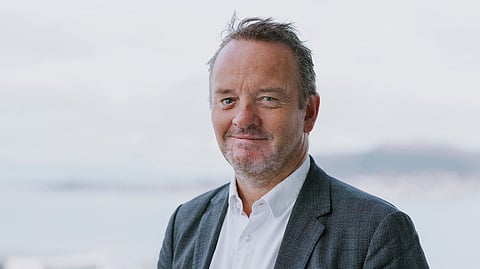


Geir Ove Ystmark, CEO of Sjømat Norge (The Norwegian Seafood Federation).
Photo: Tone Molnes / Sjømat Norge.

The Norwegian Seafood Federation Sjømat Norge (Seafood Norway) has called for the Norwegian Directorate of Fisheries to regain management responsibility for aquaculture, arguing that the current system is slowing down site approvals and preventing changes it says are needed to improve fish welfare and reduce environmental pressures.
The industry organisation made the proposal at an input meeting on Norway’s aquaculture white paper on Tuesday. At present, county municipalities hold administrative responsibility for aquaculture, while several state bodies have veto powers in the approval process.
According to Sjømat Norge, this division of responsibility has contributed to long processing times and, in some cases, the rejection of changes the sector considers necessary.
“Today's management is fragmented, and it can take years to get a site approved. A number of administrative bodies have veto power. Applications are often rejected, or they take an unnecessarily long time to process. When we know how important a good site structure is for fish health and the environment, it must be prioritized to put good management of aquaculture in place,” said Geir Ove Ystmark, Sjømat Norge CEO.
The organisation highlighted a pilot project in Trøndelag in the early 2000s, when the Directorate of Fisheries was delegated authority to decide on relevant cases. Seafood Norway said the project led to shorter case processing times and greater user satisfaction, with decisions later approved by the State Administrator.
“Access to the right locations is crucial to reduce infection pressure, improve fish welfare and ensure high survival. In some places, there is a need for farmers to switch locations among themselves, in other places the distance needs to be increased, or a facility needs to be moved a few hundred meters. These required changes are currently being prevented by the administration,” Ystmark said.
Sjømat Norge also argued that aquaculture policy impacts on food security, contending that food production should be treated as a critical societal function amid the current geopolitical situation.
“Aquaculture must have access to land, and we need effective land and location management,” Ystmark said.
“We must take time to develop good and correct regulations for aquaculture. It is better to take time than to make hasty changes that have unintended and major consequences for the industry,” he added.
